
TL;DR: Postmark offers the strongest deliverability specifically optimized for transactional email (password resets, receipts, notifications), with strict policies preventing marketing email from diluting sender reputation. Amazon SES is the cheapest option at scale for technically capable teams. SendGrid offers the best balance of features, documentation, and ease of integration for most growing businesses. Below, we compare 7 platforms by deliverability, pricing, and developer experience.
Executive Summary
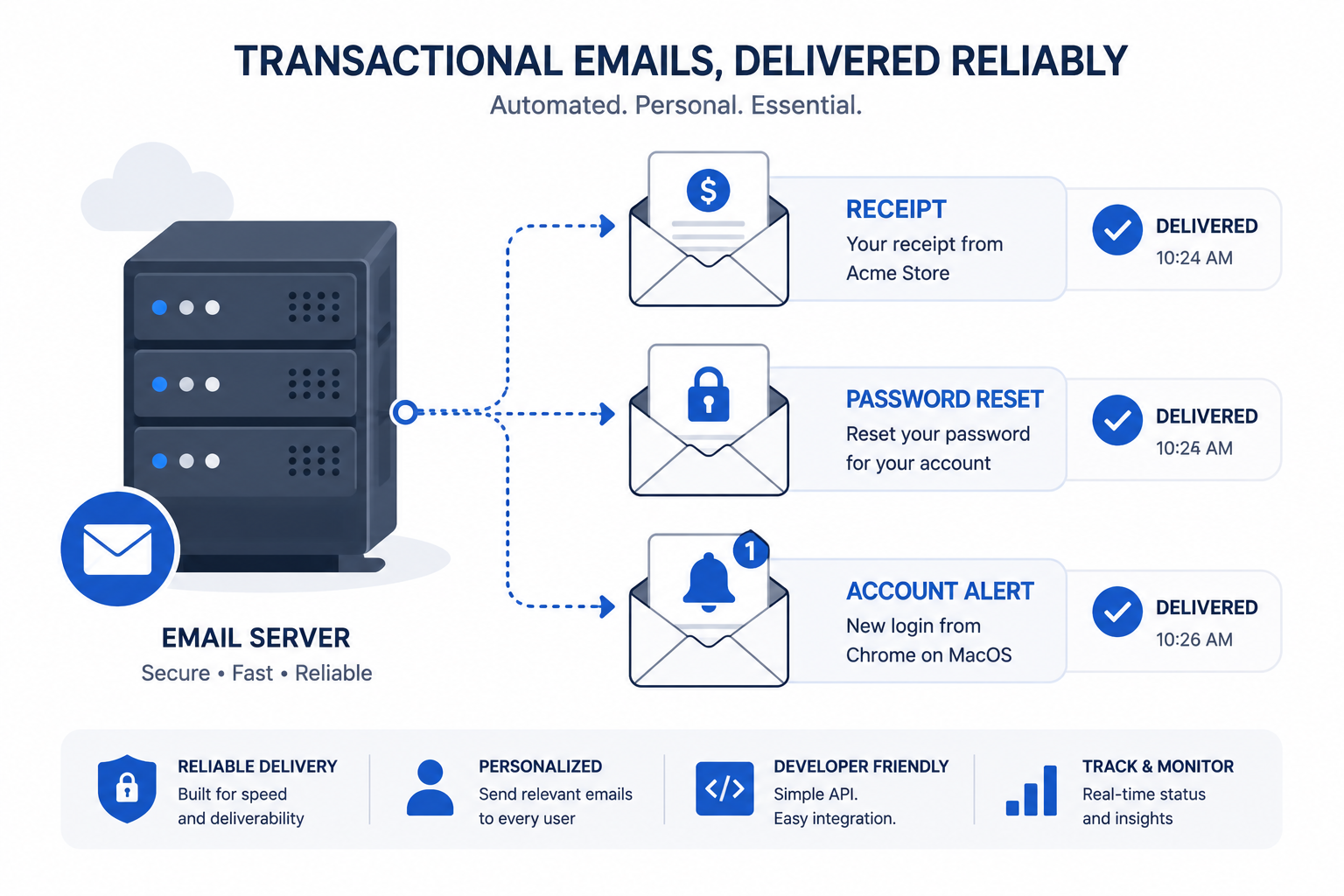
Transactional emails — password resets, order confirmations, shipping notifications, account alerts — are fundamentally different from marketing emails. Users expect and need them immediately, and poor deliverability on transactional email directly damages user experience and trust, unlike a missed marketing campaign.
Dedicated transactional email services are optimized specifically for this use case: fast delivery, high deliverability, and developer-friendly APIs, separate from marketing-focused platforms that risk reputation dilution when transactional and promotional email share the same sending infrastructure.
This guide compares the seven leading transactional email services in 2026.
Who This Guide Is For
- Developers integrating email functionality into a web or mobile application
- Businesses currently sending transactional email through a marketing platform and experiencing deliverability issues
- SaaS companies needing reliable account notifications, password resets, and billing receipts
- Ecommerce platforms needing order confirmation and shipping notification infrastructure
Why Transactional Email Needs Dedicated Infrastructure
Mixing transactional and marketing email on the same sending domain and infrastructure creates risk: if your marketing campaigns generate spam complaints or low engagement, it can drag down deliverability for your critical transactional emails too — meaning a customer might miss their password reset because of an unrelated promotional campaign’s reputation damage.
Dedicated transactional email services isolate this risk, often through separate IP pools and strict policies against using their service for bulk marketing sends.
Quick Comparison Table
| Platform | Starting Price | Free Tier | Best For |
|---|---|---|---|
| Postmark | $15/month (10,000 emails) | 100 emails/month | Best deliverability focus |
| Amazon SES | $0.10 per 1,000 emails | 62,000 emails/month (if on AWS) | Cheapest at scale |
| SendGrid | $19.95/month (50,000 emails) | 100 emails/day | Best balance of features and docs |
| Mailgun | $35/month (50,000 emails) | 5,000 emails/month (3 months) | Developer-focused flexibility |
| Resend | $20/month (50,000 emails) | 3,000 emails/month | Modern developer experience |
| SparkPost | Custom (volume-based) | 500 emails/month | High-volume enterprise senders |
| Mailjet | $17/month (15,000 emails) | 6,000 emails/month | Combined transactional + marketing |
Postmark — Best Deliverability Focus
Postmark has built its entire reputation around transactional email deliverability, explicitly prohibiting bulk marketing sends to protect sender reputation for all customers.
Strengths:
- Strict no-marketing-email policy keeps sender reputation consistently high across the platform
- Fast, reliable delivery speed, often delivering within seconds
- Excellent, developer-friendly documentation and clear, simple API
Limitations:
- More expensive per email than Amazon SES at high volumes
- No marketing email capability at all — you’ll need a separate tool for promotional sends
Pricing: Starts at $15/month for 10,000 emails.
Best for: Businesses prioritizing maximum transactional email deliverability above all else.
Amazon SES — Cheapest at Scale
Amazon Simple Email Service offers the lowest per-email cost among major providers, particularly attractive for high-volume technical teams already using AWS infrastructure.
Strengths:
- Extremely low per-email cost, especially valuable at high sending volumes
- Deep integration with other AWS services if your infrastructure is already AWS-based
- Reliable delivery infrastructure backed by Amazon’s broader cloud reliability
Limitations:
- Minimal built-in tooling — requires more development work for templates, analytics, and bounce handling compared to purpose-built alternatives
- Less beginner-friendly setup, particularly outside the AWS ecosystem
Pricing: $0.10 per 1,000 emails ($0.12 if sending from outside EC2).
Best for: Technical teams with AWS infrastructure already in place wanting the lowest possible per-email cost.
SendGrid — Best Balance of Features and Documentation
SendGrid (owned by Twilio) offers a well-rounded combination of transactional email infrastructure, marketing capability, and extensive documentation.
Strengths:
- Extensive, well-maintained documentation and SDKs across major programming languages
- Supports both transactional and marketing email use cases on one platform
- Strong analytics and deliverability monitoring tools built in
Limitations:
- Historical deliverability reputation has had some inconsistency reported by users compared to Postmark’s stricter approach
- Pricing increases meaningfully at higher volume tiers
Pricing: Starts at $19.95/month for 50,000 emails.
Best for: Growing businesses wanting solid documentation and the flexibility to handle both transactional and marketing email.
Mailgun — Best Developer Flexibility
Mailgun emphasizes developer control and flexibility, with extensive API capabilities for custom email infrastructure needs.
Strengths:
- Highly flexible API with granular control over sending behavior
- Strong email validation tools to reduce bounce rates proactively
- Good log retention and debugging tools for troubleshooting delivery issues
Limitations:
- Less beginner-friendly than SendGrid or Postmark for non-technical implementation
- Pricing has shifted over time, requiring close attention to current tier structures
Pricing: Starts at $35/month for 50,000 emails.
Best for: Development teams wanting maximum API flexibility and control over email infrastructure.
Resend — Best Modern Developer Experience
Resend is a newer entrant specifically designed around modern developer workflows and frameworks, with particular popularity among teams using React-based email templates.
Strengths:
- Clean, modern API and SDK design favored by developers working with modern frameworks
- Native support for React Email templating
- Straightforward, transparent pricing structure
Limitations:
- Smaller company with less long-term track record compared to established players like SendGrid or Postmark
- Smaller ecosystem of third-party integrations and community resources
Pricing: Starts at $20/month for 50,000 emails.
Best for: Modern development teams, particularly those using React, wanting a clean, contemporary API experience.
SparkPost — Best for High-Volume Enterprise
SparkPost targets larger-scale senders needing enterprise-grade infrastructure and analytics for substantial transactional email volume.
Strengths:
- Strong analytics and deliverability insights suited to enterprise monitoring needs
- Scales well for very high-volume sending requirements
- Good dedicated IP options for large senders needing reputation isolation
Limitations:
- Custom, volume-based pricing makes budgeting less predictable for smaller businesses
- Less accessible entry point for smaller-scale needs compared to Postmark or SendGrid
Pricing: Custom, volume-based pricing for enterprise-scale sending.
Best for: Enterprise-scale senders with substantial transactional email volume needing advanced analytics.
Mailjet — Best Combined Transactional and Marketing
Mailjet positions itself as a unified solution for businesses wanting both transactional and marketing email capability without juggling separate platforms.
Strengths:
- Combines transactional API capability with marketing campaign tools in one platform
- Reasonable pricing for businesses needing both use cases
- Good collaborative features for teams building email templates together
Limitations:
- Less specialized deliverability optimization than dedicated transactional-only services like Postmark
- Smaller market presence than SendGrid or Mailgun
Pricing: Starts at $17/month for 15,000 emails.
Best for: Businesses wanting transactional and marketing email capability unified in a single platform.
How to Choose the Right Transactional Email Service
If deliverability is your absolute top priority: Postmark.
If you want the lowest cost at high volume and have AWS expertise: Amazon SES.
If you want strong documentation and balanced features: SendGrid.
If you need maximum API flexibility and control: Mailgun.
If you’re using React for email templates: Resend.
If you’re sending at enterprise scale: SparkPost.
If you want transactional and marketing unified: Mailjet.
Setting Up Transactional Email Correctly
- Use a dedicated subdomain for transactional email (e.g., notifications.yourdomain.com), isolating it from any marketing sending reputation
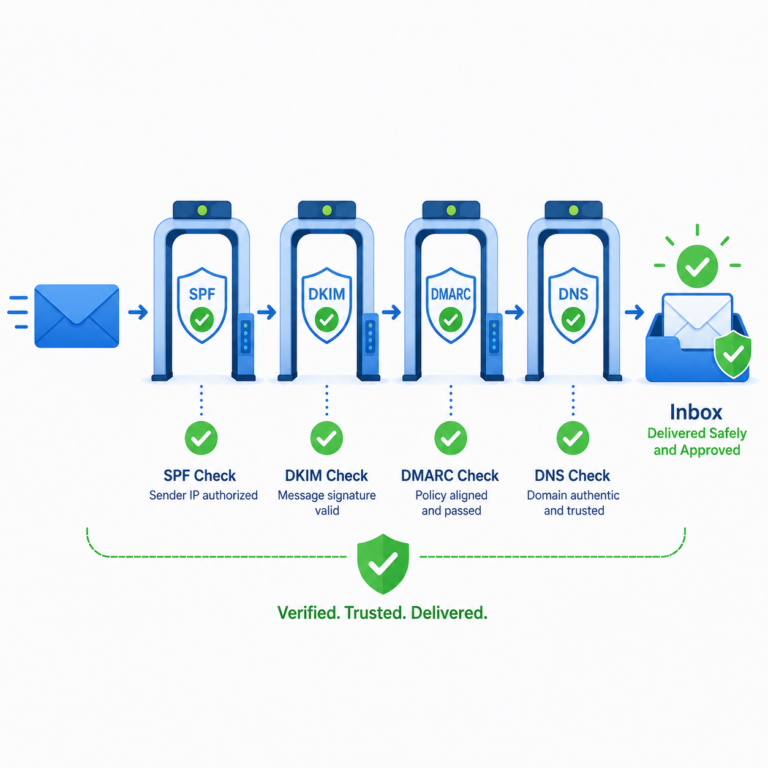
- Configure SPF, DKIM, and DMARC properly for your transactional sending domain, just as you would for marketing email
- Monitor bounce and complaint rates closely — transactional email bounces often indicate account or data quality issues worth investigating
- Test critical emails (password resets, receipts) across major providers to confirm reliable, fast delivery before launching
Frequently Asked Questions
What’s the difference between transactional and marketing email services?
Transactional services are optimized for triggered, individual emails (password resets, receipts) requiring fast, reliable delivery, while marketing services are built for bulk, scheduled campaign sends with broader analytics and audience management features.
Can I use SendGrid or Mailgun for marketing email too?
Yes, both support marketing use cases, though dedicated marketing platforms like Klaviyo or Mailchimp typically offer more sophisticated campaign and automation tools for that specific purpose.
Is Amazon SES difficult to set up?
It requires more development work than purpose-built services like Postmark or SendGrid, particularly for templates, bounce handling, and analytics, making it best suited for technically capable teams.
Why does Postmark prohibit marketing email?
This policy protects deliverability for all Postmark customers by preventing the kind of bulk sending behavior that often generates spam complaints and damages sender reputation shared across infrastructure.
How much does transactional email typically cost for a small SaaS business?
For most small businesses sending under 50,000 transactional emails monthly, expect $15-35/month depending on the chosen provider and specific volume.
Do I need a developer to set up a transactional email service?
Yes, generally these services are API-based and require development integration, unlike marketing platforms that often offer no-code campaign builders.
Should transactional emails use a different domain than marketing emails?
Using a dedicated subdomain for transactional email is best practice, isolating sender reputation risk between the two email types even if using the same root domain.
Which service is best for a business just starting out with minimal technical resources?
SendGrid generally offers the most accessible documentation and developer experience for teams without extensive prior email infrastructure experience.
Final Verdict
For businesses prioritizing maximum deliverability for critical transactional email, Postmark remains the strongest specialized choice given its strict policy isolating transactional sending reputation. Technical teams already on AWS wanting the lowest possible cost at scale should consider Amazon SES, while most growing businesses will find SendGrid offers the best balance of documentation, features, and ease of integration.
Whichever service you choose, always use a dedicated subdomain for transactional sending and properly configure authentication records — these fundamentals matter as much as the platform choice itself for ensuring critical emails like password resets and receipts reliably reach your users.
Pricing reflects publicly available rates as of mid-2026 and may change. Verify current pricing directly with each provider.