
TL;DR: A strong first-party data strategy in 2026 centers on directly collecting customer information through owned channels — email signups, account creation, purchase history, loyalty programs, and zero-party data surveys — rather than relying on third-party cookies or purchased data lists. Build collection touchpoints with clear value exchange, centralize data through native tool integrations or a CDP, and activate it through personalization and segmentation across your owned marketing channels.
Executive Summary
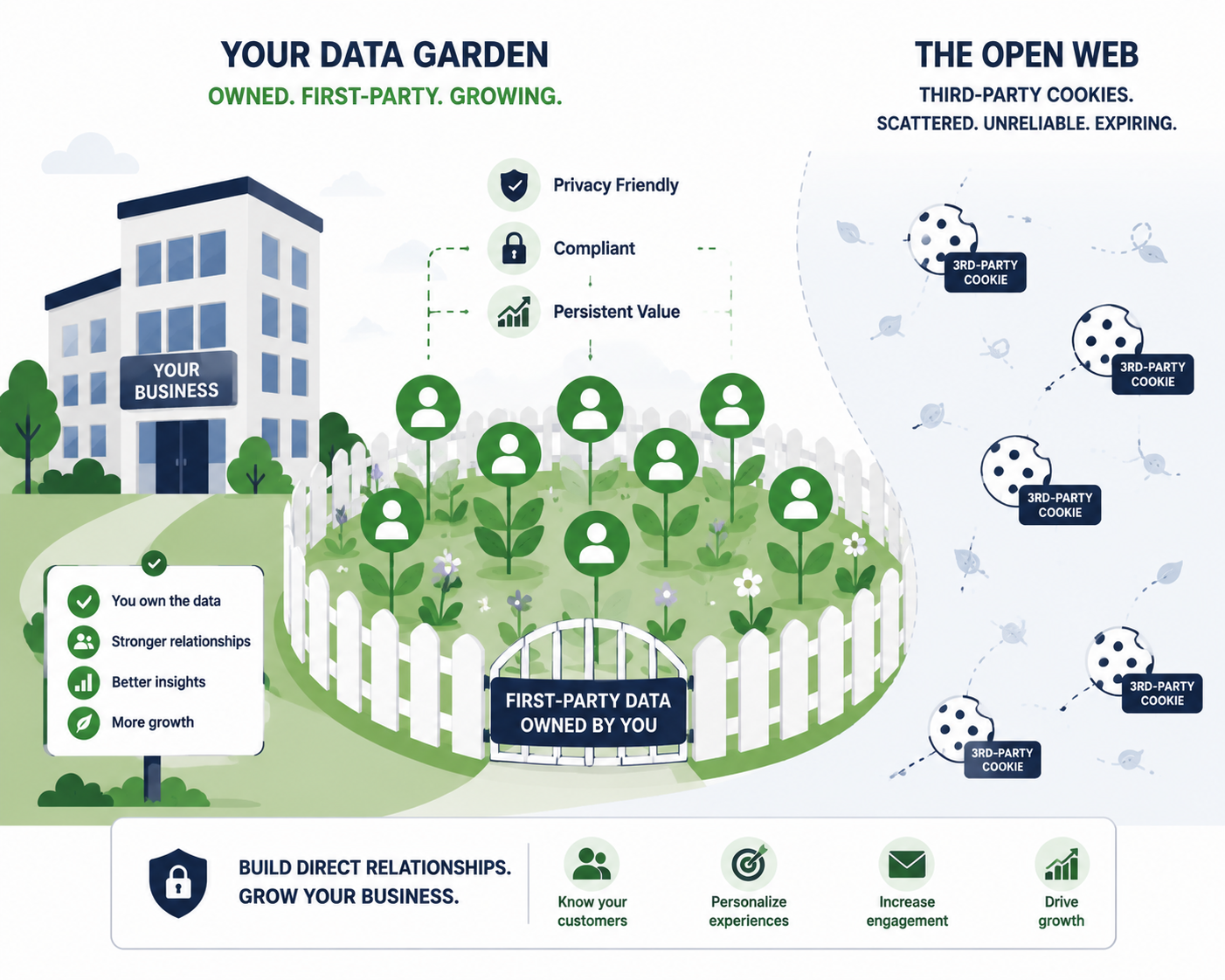
Third-party cookie deprecation, browser privacy restrictions, and tightening privacy regulations have collectively pushed marketing strategy toward data you directly collect and own, rather than data purchased or borrowed from external ad networks and data brokers. First-party data — information customers and prospects give you directly through their interactions with your business — has become the foundation of sustainable, compliant marketing.
This guide provides a complete framework for building, centralizing, and activating first-party data effectively in 2026.
Who This Guide Is For
- Marketers transitioning away from third-party cookie-dependent strategies
- Ecommerce and SaaS businesses wanting to build sustainable, owned audience data
- Companies preparing for continued privacy regulation tightening
- Anyone building a customer data collection strategy from the ground up
First-Party vs. Zero-Party vs. Third-Party Data
| Data Type | Source | Example |
|---|---|---|
| First-party data | Collected directly through your own interactions with customers | Purchase history, website behavior, email engagement |
| Zero-party data | Explicitly and voluntarily provided by the customer | Survey responses, stated preferences, quiz results |
| Third-party data | Collected by external parties and purchased or licensed | Ad network audience segments, purchased contact lists |
Why this distinction matters for strategy: Zero-party data is the most reliable and consent-clear category, since customers explicitly chose to share it. First-party data is broader and includes both explicit and observed behavioral data. Third-party data carries the highest compliance risk and is becoming increasingly unreliable as cookie restrictions tighten.
Building Your First-Party Data Collection Strategy
1. Create Clear Value Exchange at Every Collection Point
Customers share data more willingly when they understand what they get in return — a discount for email signup, personalized recommendations for preference data, or exclusive content for account creation.
2. Diversify Your Collection Touchpoints
| Touchpoint | Data Collected | Implementation |
|---|---|---|
| Email/SMS signup | Contact information, initial preferences | Popup, footer form, checkout opt-in |
| Account creation | Purchase history, saved preferences | Account registration incentivized with perks |
| Loyalty programs | Purchase frequency, product preferences | Points-based rewards tied to repeat engagement |
| Zero-party surveys | Explicit stated preferences | Post-purchase or onboarding quizzes |
| Website behavior | Browsing patterns, product interest | First-party analytics and behavioral tracking |
| Customer service interactions | Pain points, product feedback | Support ticket and chat data |
3. Use Progressive Profiling
Rather than asking for extensive information upfront (which reduces conversion), collect data incrementally across multiple touchpoints — basic contact info at signup, preferences during onboarding, behavioral data through ongoing engagement.
4. Incentivize Zero-Party Data Specifically
Quizzes, preference centers, and surveys that directly ask customers about their needs and interests provide explicit, high-confidence data that behavioral inference alone can’t replicate.
Centralizing First-Party Data
For Smaller Businesses
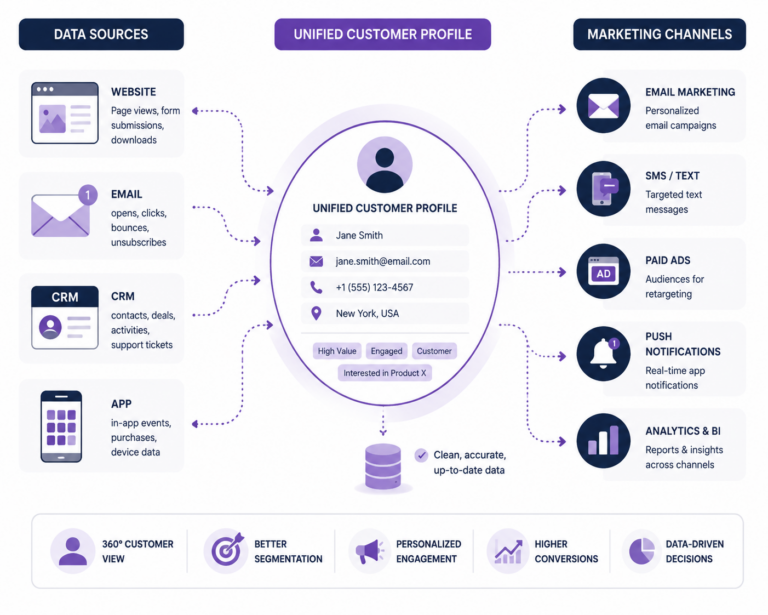
Native integrations between your core tools (ecommerce platform, email marketing tool, CRM) often provide sufficient data centralization without requiring a dedicated platform — most modern ecommerce and email platforms already share data bidirectionally.
For Larger or More Complex Businesses
A dedicated customer data platform (CDP) becomes valuable once data sources multiply beyond what native integrations can reasonably unify, particularly when cross-channel identity resolution becomes important for sophisticated segmentation.
(See our Customer Data Platform Explained guide for deeper context on when a CDP makes sense.)
Activating First-Party Data
1. Behavioral Segmentation
Use purchase history, browsing behavior, and engagement patterns to create segments for targeted email and SMS campaigns — significantly more effective than generic, undifferentiated messaging.
2. Predictive Personalization
Platforms like Klaviyo use first-party purchase and engagement data to predict customer lifetime value, churn risk, and next likely purchase, enabling proactive rather than purely reactive marketing.
3. Lookalike and Custom Audiences for Paid Media
Upload first-party customer data (in privacy-compliant, hashed formats) to ad platforms to build custom and lookalike audiences, reducing dependency on third-party targeting data that’s becoming less available and reliable.
4. Onsite Personalization
Use first-party behavioral and purchase data to personalize website experiences — product recommendations, dynamic content, and tailored messaging based on known customer history.
First-Party Data Strategy by Business Type
Ecommerce
Prioritize purchase history, browsing behavior, and loyalty program data, activated through Klaviyo or similar platforms for segmentation and predictive personalization.
SaaS
Prioritize product usage data, feature adoption patterns, and support interaction history, activated through in-app messaging and lifecycle email campaigns tied to usage milestones.
B2B Services
Prioritize firmographic data, content engagement, and sales interaction history, activated through account-based marketing and sales enablement tools.
Common First-Party Data Strategy Mistakes
| Mistake | Consequence |
|---|---|
| Collecting data without a clear activation plan | Data sits unused, providing no actual marketing value |
| Asking for too much information upfront | Reduces conversion at collection touchpoints |
| No clear value exchange for data sharing | Lower opt-in and completion rates |
| Treating first-party data collection as a one-time project | Misses ongoing opportunities to enrich profiles over time |
| Ignoring data quality and hygiene | Degrades segmentation and personalization accuracy over time |
Privacy Compliance for First-Party Data Strategy
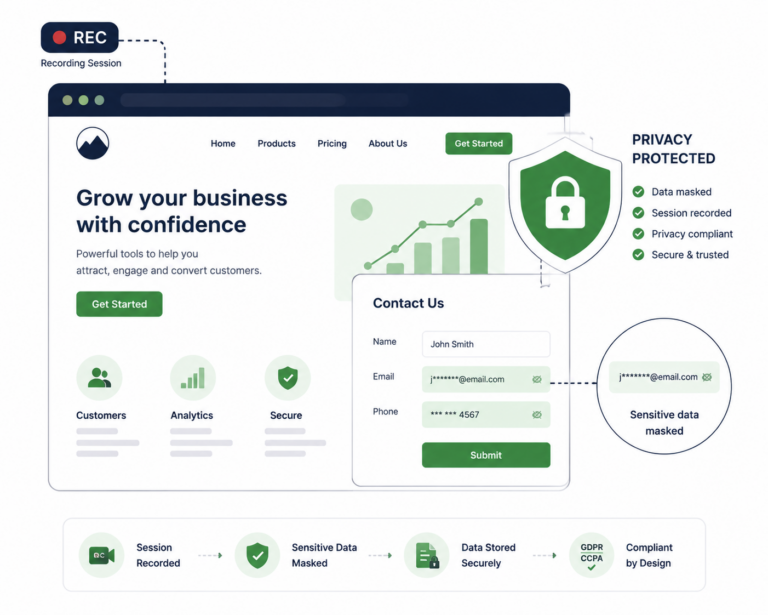
Even first-party data collected directly requires proper compliance handling:
- Obtain appropriate consent for the specific uses you intend (marketing emails, personalization, advertising)
- Disclose data collection and use clearly in your privacy policy
- Honor access, deletion, and opt-out requests as required under GDPR, CCPA, or applicable regulations
- Apply data minimization principles — collect what you’ll genuinely use, not data “just in case”
(See our GDPR Compliant Email Marketing and CCPA vs GDPR for Marketers guides for detailed compliance requirements.)
Measuring First-Party Data Strategy Success
| Metric | What It Indicates |
|---|---|
| Email/SMS list growth rate | Effectiveness of collection touchpoints and value exchange |
| Profile completeness (% of contacts with enriched data beyond basic contact info) | Success of progressive profiling efforts |
| Segmentation-driven campaign performance vs. generic campaigns | Activation effectiveness |
| Customer lifetime value trend among engaged, well-profiled customers | Long-term strategic impact |
Frequently Asked Questions
Is first-party data strategy only relevant because of cookie deprecation?
Cookie deprecation accelerated urgency, but first-party data has always been more reliable and valuable than third-party alternatives — it reflects your actual customers’ direct behavior and stated preferences, not borrowed or inferred external data.
Do I need a CDP to execute a first-party data strategy?
Not necessarily — many businesses execute effective first-party data strategies using native integrations between core tools (ecommerce, email, CRM) without a dedicated CDP, reserving that investment for when data complexity genuinely requires it.
What’s the easiest first step for building a first-party data strategy?
Start with a clear value exchange at your primary collection touchpoint (typically email signup), then progressively add zero-party data collection through preference centers or quizzes as a next step.
How is zero-party data different from first-party data in practice?
Zero-party data is explicitly, voluntarily shared (a stated preference in a quiz), while broader first-party data includes both this explicit information and observed behavioral data (browsing history, purchase patterns) collected through your own systems.
Can I still use paid advertising effectively without third-party data?
Yes, uploading first-party customer data to build custom and lookalike audiences on ad platforms is an increasingly important strategy as third-party targeting data becomes less reliable and available.
How do I get customers to willingly share more data with my business?
Clear value exchange is key — discounts, personalized recommendations, exclusive content, or improved product experience in direct exchange for the specific information you’re requesting.
Does first-party data strategy apply to B2B businesses, or just B2C/ecommerce?
Yes, B2B businesses benefit equally, focusing on firmographic data, content engagement, and sales interaction history rather than the purchase-history focus more central to B2C/ecommerce strategies.
What happens if I don’t invest in first-party data collection?
Businesses relying primarily on third-party data and cookie-based targeting face increasing difficulty as browser restrictions and privacy regulations continue tightening, ultimately resulting in less effective, less compliant marketing over time.
Final Verdict
A strong first-party data strategy isn’t a single tool or tactic — it’s a comprehensive approach spanning collection (with clear value exchange), centralization (through native integrations or a CDP as complexity demands), and activation (through segmentation, personalization, and privacy-compliant paid media targeting).
Businesses that invest deliberately in first-party data collection now build a sustainable competitive advantage as third-party data sources continue becoming less reliable and available — this isn’t a temporary adjustment to current privacy trends, but the foundation of effective, compliant marketing going forward.
This guide provides general strategic guidance as of mid-2026. Specific implementation approaches and tool capabilities continue to evolve.