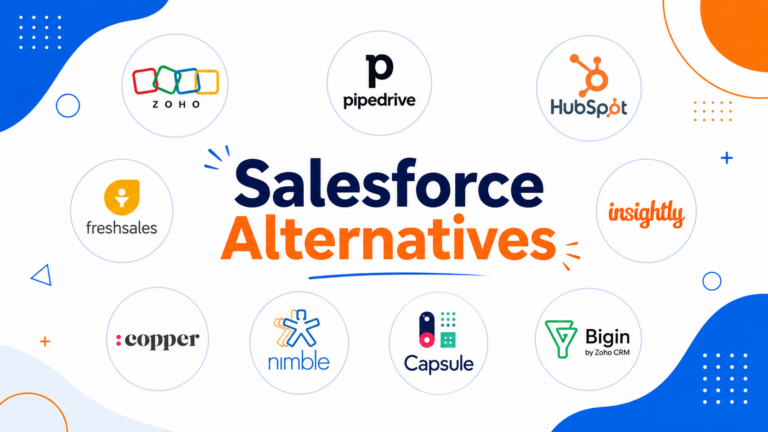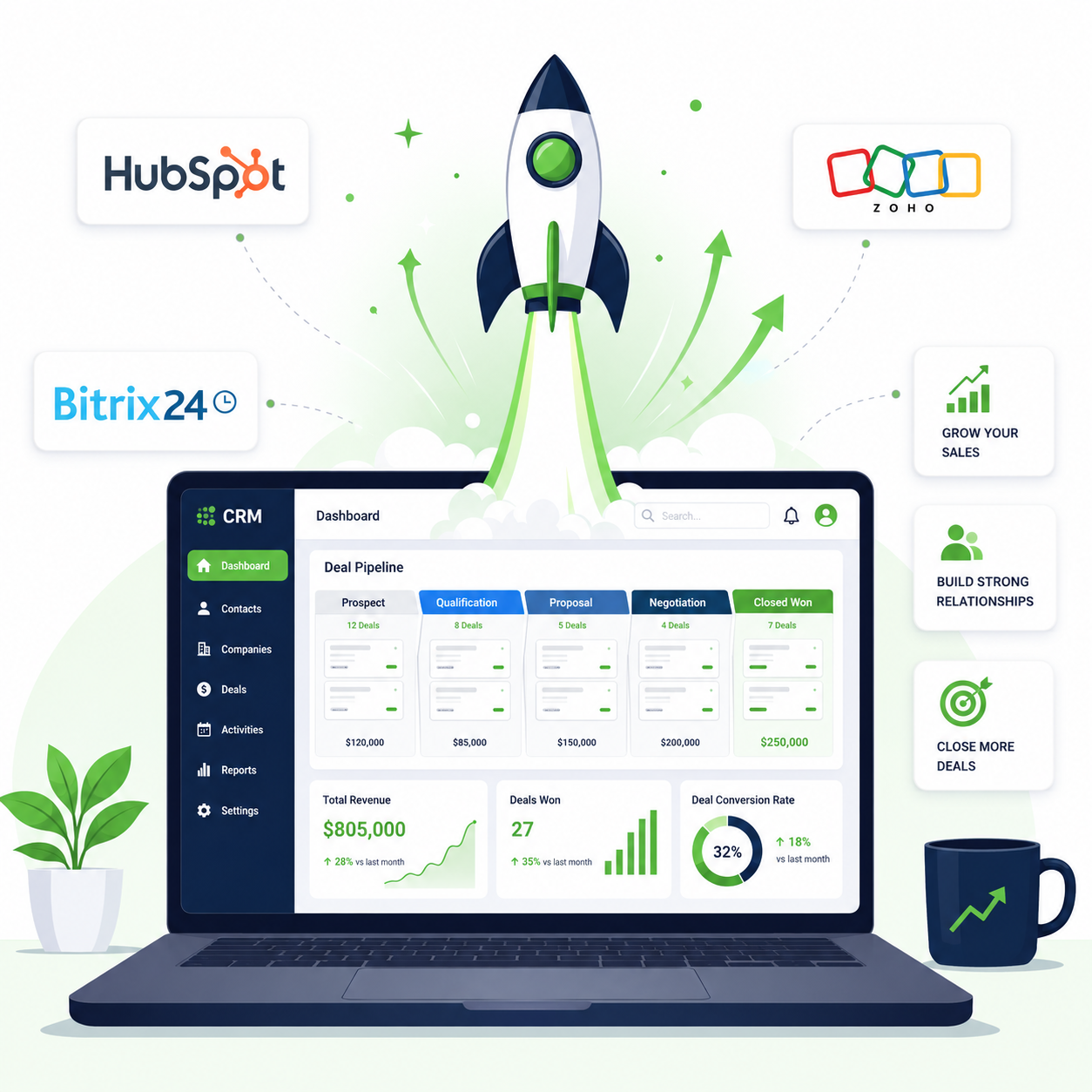

TL;DR: HubSpot’s free CRM remains the best overall choice for startups, offering genuinely usable contact management, deal pipelines, and email tracking with no time limit and no credit card required. Bitrix24 wins if you need the most generous free user limit. Zoho CRM’s free tier is best if you want room to grow into Zoho’s broader affordable ecosystem. Below, we compare 8 free CRM options startups actually use.
Executive Summary
Early-stage startups face a specific tension with CRM selection: you need real functionality to track leads and deals professionally, but burning runway on software before you have product-market fit or consistent revenue is a real risk. Fortunately, several CRM platforms offer free tiers that are genuinely usable — not just crippled trial versions designed to force an immediate upgrade.
This guide compares the eight strongest free CRM options for startups in 2026, focused specifically on what you get for $0 and how painful the eventual upgrade path is.
Who This Guide Is For
- Pre-seed and seed-stage startups setting up their first CRM
- Solo founders managing their own sales pipeline before hiring
- Bootstrapped companies prioritizing runway over premium tooling
- Teams wanting to validate CRM fit before committing to a paid plan
Evaluation Criteria
- Genuine usability at $0 — not a crippled trial, but real ongoing functionality
- User limits — how many team members can use it for free
- Contact/deal limits — how much data you can store before hitting a wall
- Upgrade path — how reasonable the jump to paid tiers is once you outgrow free
Quick Comparison Table
| Platform | Free Users | Free Contacts | Best For |
|---|---|---|---|
| HubSpot CRM | Unlimited | 1,000,000 (limited features) | Best overall free tier |
| Bitrix24 | Up to 12 | 5,000 | Most generous user limit |
| Zoho CRM | Up to 3 | 5,000 | Growing into Zoho ecosystem |
| Zoho Bigin | Up to 1 (paid adds more) | 500 | Solo founders, pipeline simplicity |
| Freshsales | Up to 3 | Unlimited (basic features) | AI-assisted scoring on a budget |
| Streak | 1 (Gmail-based) | 500 | Gmail-native solo use |
| Capsule CRM | 2 | 250 | Simple contact management |
| Insightly | 2 | 2,500 | Project management crossover |
HubSpot CRM — Best Overall Free Tier
HubSpot’s free CRM is the most consistently recommended starting point for startups, largely because it doesn’t feel artificially limited the way many “free” business tools do.
Strengths:
- Unlimited users at no cost — rare among competitors
- Contact and deal management, email tracking, and basic reporting included
- Easy upgrade path into Marketing, Sales, or Service Hub if you need more later
- Strong documentation and onboarding resources
Limitations:
- Advanced automation, A/B testing, and custom reporting require paid Hubs
- Free tier branding appears on some customer-facing elements (forms, emails)
Pricing: $0 indefinitely; paid Hubs start at $20/user/month.
Best for: Most startups wanting a genuinely functional CRM with room to add paid features incrementally.
(For full pricing detail once you’re ready to upgrade, see our HubSpot Pricing Explained guide.)
Bitrix24 — Best for Larger Free Teams
Bitrix24 stands out by allowing up to 12 free users, far more generous than most competitors that cap free tiers at 1-3 users.
Strengths:
- Free tier supports up to 12 users — ideal for growing early teams
- Includes basic project management and team chat alongside CRM
- 5GB of free file storage included
Limitations:
- Interface has a steeper learning curve due to feature breadth
- Performance can feel sluggish with the free tier’s resource limits
Pricing: $0 for up to 12 users; paid plans start around $61/month for the full team.
Best for: Startups with a larger early team wanting more than just CRM (project management, chat) bundled in.
Zoho CRM — Best for Growing into a Broader Ecosystem
Zoho’s free tier is more limited in user count but offers a clear, affordable path into Zoho’s broader suite of business tools as you grow.
Strengths:
- Genuinely functional lead and contact management
- Affordable paid tiers if you outgrow free (Standard at $14/user/month)
- Natural upgrade path into Zoho Books, Desk, and Campaigns
Limitations:
- Limited to 3 free users
- Workflow automation requires a paid upgrade
Pricing: $0 for up to 3 users; Standard tier starts at $14/user/month.
Best for: Startups anticipating they’ll want an affordable, integrated business suite as they scale.
(See our full Zoho CRM vs Salesforce Essentials comparison for more detail.)
Zoho Bigin — Best for Solo Founders
Bigin is Zoho’s pipeline-focused, simplified CRM built specifically for very small teams and solo founders who find full CRM platforms overwhelming.
Strengths:
- Extremely simple, fast setup focused purely on pipeline tracking
- Affordable paid tier if you need to add users later ($7/user/month)
- Clean interface with minimal learning curve
Limitations:
- Limited to 500 contacts on the free tier
- Lacks broader CRM features (marketing automation, advanced reporting)
Pricing: Free for 1 user; paid plans start at $7/user/month.
Best for: Solo founders wanting bare-bones pipeline tracking without complexity.
Freshsales — Best AI-Assisted Free Option
Freshsales includes basic AI-powered lead scoring even on its free tier, which is unusual at this price point.
Strengths:
- Unlimited contacts even on the free tier
- Basic AI deal insights included
- Clean, modern interface
Limitations:
- Limited to 3 free users
- Advanced automation and reporting require paid upgrade
Pricing: $0 for up to 3 users; paid plans start at $9/user/month.
Best for: Startups wanting AI-assisted prioritization without paying for it initially.
Streak — Best Gmail-Native Free Option
Streak operates entirely within Gmail, making it appealing for founders who don’t want to learn a separate platform.
Strengths:
- No separate app to learn — works directly inside Gmail
- Quick to set up with minimal configuration
- Genuinely free for basic personal use
Limitations:
- Limited to 500 contacts free
- Not well suited for teams beyond a single user on the free tier
Pricing: Free for individual use; team plans start at $15/user/month.
Best for: Solo founders who want the absolute simplest CRM experience inside their existing inbox.
Capsule CRM — Best Simple Contact Management
Capsule focuses on straightforward contact and relationship management without the complexity of a full sales platform.
Strengths:
- Clean, simple interface with minimal learning curve
- Good for relationship-focused businesses, not just transactional sales
- Free tier covers basic startup needs adequately
Limitations:
- Limited to 250 contacts on the free tier
- Fewer advanced features than competitors at comparable price points
Pricing: Free for 2 users; paid plans start around $18/user/month.
Best for: Startups prioritizing simple relationship tracking over complex pipeline automation.
Insightly — Best for Project Management Crossover
Insightly bundles basic project management features alongside CRM, useful for startups managing client delivery alongside sales.
Strengths:
- Combines CRM with basic project tracking
- Reasonable free contact limit (2,500)
- Useful for service-based startups managing both sales and delivery
Limitations:
- Limited to 2 free users
- Interface feels less modern than some competitors
Pricing: Free for 2 users; paid plans start around $29/user/month.
Best for: Service-based startups wanting basic project tracking alongside CRM.
How to Choose the Right Free CRM
If you want the most functional all-around free tier: HubSpot CRM.
If you have a larger early team (5-12 people): Bitrix24.
If you plan to grow into a broader business tool ecosystem: Zoho CRM.
If you’re a solo founder wanting pure simplicity: Zoho Bigin or Streak.
If you want AI-assisted lead scoring at no cost: Freshsales.
If you manage client delivery alongside sales: Insightly.
When to Upgrade from a Free CRM
Watch for these signals that you’ve outgrown your free tier:
- You’re hitting contact or user limits regularly and working around them with workarounds (spreadsheets, duplicate accounts)
- You need automation beyond basic reminders — multi-step sequences, lead scoring, or workflow triggers
- Reporting needs become more complex than the free tier’s basic dashboards support
- Your team has grown beyond the free user cap and you’re paying anyway via duplicate free accounts (which most platforms prohibit and can detect)
Frequently Asked Questions
Is a free CRM good enough for a startup raising its first round?
Yes, for most pre-seed and seed-stage startups, a free CRM is entirely adequate. Investors care about your traction and process discipline, not which CRM tier you’re paying for.
Will I lose my data if I upgrade from a free CRM to a paid tier?
No, upgrading within the same platform (e.g., free HubSpot to paid HubSpot) retains all your existing data. Switching to a completely different platform requires export/import and may lose some metadata.
Which free CRM has the best mobile app?
HubSpot and Zoho CRM both offer well-rated, fully functional mobile apps even on their free tiers, useful for founders managing deals while traveling or between meetings.
Can multiple co-founders use a free CRM together?
Yes, though user limits vary significantly — HubSpot allows unlimited free users, while Zoho Bigin and Streak are essentially single-user free tiers.
Do free CRMs include email integration?
Most do, including HubSpot, Zoho, and Freshsales, which sync with Gmail or Outlook to log email activity automatically against contacts and deals.
Is it worth starting with a paid CRM instead of free?
Generally no for early-stage startups. Validate your sales process and actual feature needs on a free tier first — you’ll make a better-informed upgrade decision once you know exactly what you’re missing.
How do free CRMs make money if they’re free?
Free tiers function as a funnel toward paid upgrades as your contact count, user count, or feature needs grow beyond the free limits — a standard freemium business model across the CRM industry.
What’s the biggest limitation across most free CRM tiers?
Workflow automation is almost universally restricted to paid tiers. If automated follow-ups and lead routing are critical to your process, budget for an eventual upgrade sooner rather than later.
Final Verdict
For most startups, HubSpot’s free CRM remains the strongest starting point — genuinely usable, unlimited free users, and a clear upgrade path if you need more later. Larger early teams should consider Bitrix24 for its generous 12-user free tier, while startups planning to grow into a broader affordable business suite are well served starting with Zoho CRM.
Whichever you choose, the goal at this stage isn’t finding the “best” CRM in the abstract — it’s building the discipline of tracking leads and deals consistently, which matters far more at this stage than any specific platform’s feature set.
Pricing and feature limits reflect publicly available rates as of mid-2026 and may change. Verify current free tier limits directly with each vendor before committing.