
TL;DR: ActiveCampaign offers the strongest overall automation depth at a price accessible to small businesses. Omnisend is the best choice specifically for ecommerce stores wanting native SMS included. HubSpot’s free tier and Starter plan work well for businesses wanting room to grow into a broader CRM-integrated platform later. Below, we compare 8 platforms by automation sophistication, ease of use, and pricing.
Executive Summary
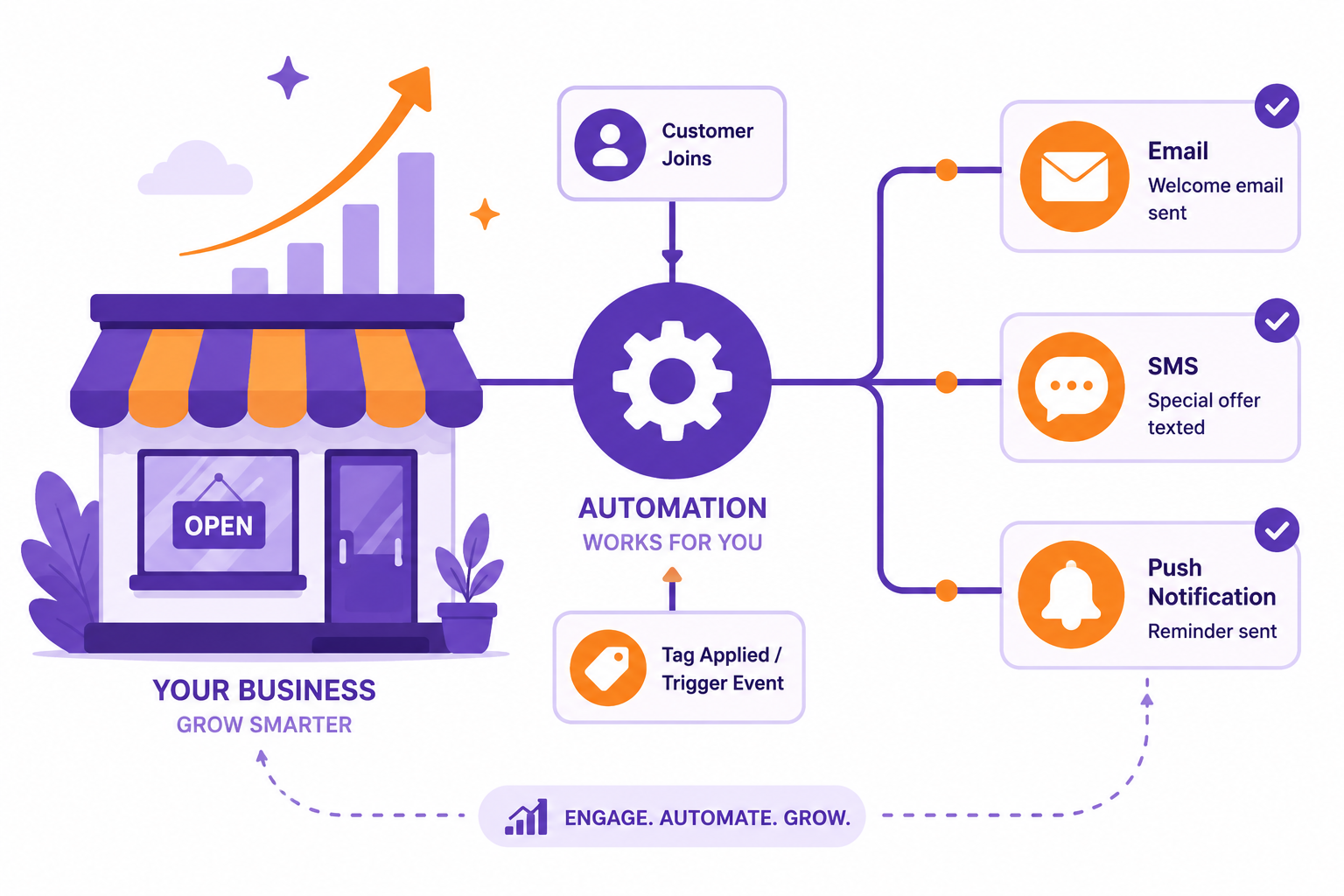
Marketing automation lets small businesses compete with the responsiveness and personalization of much larger companies — automatically nurturing leads, recovering abandoned carts, and re-engaging dormant customers without manual effort for every single interaction.
The challenge for small businesses isn’t whether to invest in automation, but choosing a platform with enough depth to be genuinely useful without unnecessary complexity or enterprise-level pricing.
This guide compares the eight leading marketing automation tools suited specifically to small business needs and budgets in 2026.
Who This Guide Is For
- Small business owners setting up their first marketing automation platform
- Businesses currently sending manual, one-off emails wanting to automate routine communication
- Ecommerce stores and service businesses comparing automation depth versus price
- Marketers evaluating whether to upgrade from a basic email tool to genuine automation
Evaluation Criteria
- Automation depth — multi-step workflows, conditional branching, behavioral triggers
- Ease of use — realistic learning curve for non-technical small business teams
- Pricing accessibility — genuine affordability at small business contact volumes
- Channel breadth — email, SMS, and other channels available natively
Quick Comparison Table
| Platform | Starting Price | Automation Depth | Best For |
|---|---|---|---|
| ActiveCampaign | $29/month | Strong | Best overall automation-to-price ratio |
| Omnisend | $16/month | Strong (ecommerce) | Ecommerce with native SMS |
| HubSpot | Free–$20/user/month | Moderate (Starter); Strong (Pro) | Growing into CRM-integrated platform |
| Klaviyo | $20/month | Strong (ecommerce) | Established ecommerce, predictive analytics |
| Mailchimp | $13/month | Basic-Moderate | Beginners, non-ecommerce |
| Brevo | Free–$25/month | Moderate | Budget-conscious, send-based pricing |
| Keap | $159/month | Strong | Service businesses needing payments too |
| GetResponse | $19/month | Moderate | Webinar and course-based businesses |
ActiveCampaign — Best Overall Automation-to-Price Ratio
ActiveCampaign built its reputation specifically on automation sophistication, making it the strongest choice for small businesses wanting genuine depth without enterprise pricing.
Strengths:
- Sophisticated visual automation builder with conditional branching and multi-channel triggers
- Built-in CRM functionality alongside marketing automation
- Strong value relative to HubSpot’s Professional-tier pricing for comparable automation depth
Limitations:
- Interface complexity increases as automations become more sophisticated
- CRM functionality, while solid, is less deep than dedicated sales-first platforms
Pricing: Starts at $29/month.
Best for: Small businesses wanting serious automation sophistication without HubSpot’s premium pricing.
Omnisend — Best for Ecommerce With Native SMS
Omnisend is purpose-built for ecommerce, bundling email, SMS, and push notifications into one affordably priced platform.
Strengths:
- Native SMS and push notifications included without a separate billing tier
- Pre-built ecommerce automation templates (abandoned cart, welcome series, post-purchase)
- Strong native Shopify and WooCommerce integration
Limitations:
- Less suited to non-ecommerce small businesses
- Segmentation lacks Klaviyo’s predictive analytics depth
Pricing: Starts at $16/month.
Best for: Ecommerce stores wanting SMS included natively without a Klaviyo-level price tag.
(For a direct comparison, see our Omnisend vs Klaviyo guide.)
HubSpot — Best for Growing Into a Broader Platform
HubSpot’s free CRM and Starter Marketing Hub provide a genuinely usable entry point, with a clear upgrade path as automation needs grow.
Strengths:
- Free CRM with unlimited users provides immediate value at no cost
- Clear upgrade path into deeper automation without switching platforms
- Strong documentation and onboarding resources
Limitations:
- Genuine automation depth requires Marketing Hub Professional, a significant price jump
- Starter tier automation is intentionally basic
Pricing: Free CRM; Marketing Hub Starter from $20/month; Professional automation requires $890/month.
Best for: Small businesses anticipating growth who want to avoid switching platforms later.
(See our HubSpot Pricing Explained guide for full tier breakdown.)
Klaviyo — Best for Established Ecommerce
Klaviyo offers the deepest segmentation and predictive analytics among ecommerce-focused platforms, justified once your store has meaningful order history.
Strengths:
- Predictive analytics (churn risk, customer lifetime value) inform sophisticated segmentation
- Strong revenue attribution tied directly to specific flows and campaigns
- Deep native Shopify/WooCommerce event tracking
Limitations:
- Higher price than Omnisend at comparable contact tiers
- SMS requires upgrading to a separate plan tier
Pricing: Starts at $20/month.
Best for: Established ecommerce stores with enough order history to benefit from predictive analytics.
Mailchimp — Best for Beginners and Non-Ecommerce
Mailchimp remains the most accessible entry point for small businesses just starting with email marketing, particularly outside ecommerce.
Strengths:
- Generous free tier and familiar, beginner-friendly interface
- Wide third-party integration library
- All-in-one features including basic landing pages and social scheduling
Limitations:
- Automation depth is notably shallower than ActiveCampaign or Klaviyo
- Weak ecommerce-specific behavioral tracking
Pricing: Starts at $13/month.
Best for: Non-ecommerce small businesses and beginners wanting the gentlest learning curve.
(See our Mailchimp vs Klaviyo comparison for ecommerce-specific decision guidance.)
Brevo — Best Budget Option
Brevo’s send-based pricing model makes it particularly cost-effective for businesses with large lists but moderate sending frequency.
Strengths:
- Pricing based on email volume rather than contact count, ideal for infrequent senders with large lists
- Includes SMS, WhatsApp, and basic CRM features
- Generous free tier (300 emails/day, unlimited contacts)
Limitations:
- Ecommerce-specific automation is less sophisticated than Omnisend or Klaviyo
- Template editor feels less modern than newer competitors
Pricing: Free plan available; paid plans start around $9–25/month depending on volume.
Best for: Budget-conscious small businesses with large but infrequently-emailed lists.
Keap — Best for Service Businesses Needing Payments
Keap bundles CRM, automation, and payment collection specifically for service-based small businesses.
Strengths:
- Built-in invoicing and payment collection alongside automation
- Automation workflows specifically designed around service business needs (booking, follow-up)
- Strong lead tagging and relationship-based sales tracking
Limitations:
- Higher starting price than most competitors on this list
- Interface feels dated compared to newer platforms
Pricing: Starts at $159/month.
Best for: Consultants, coaches, and service businesses wanting payments unified with automation.
GetResponse — Best for Webinars and Courses
GetResponse combines marketing automation with built-in webinar hosting and course creation tools, appealing to education-based small businesses.
Strengths:
- Built-in webinar hosting eliminates need for a separate platform
- Solid automation builder for nurture sequences
- Affordable entry pricing
Limitations:
- Ecommerce automation is less sophisticated than dedicated ecommerce platforms
- Smaller third-party integration ecosystem than larger competitors
Pricing: Starts at $19/month.
Best for: Course creators, coaches, and businesses hosting regular webinars as part of their marketing strategy.
How to Choose the Right Platform for Your Small Business
If you want the best automation depth for the price: ActiveCampaign.
If you run an ecommerce store and want SMS included: Omnisend.
If you want room to grow into a broader CRM platform: HubSpot.
If your ecommerce store has meaningful order history: Klaviyo.
If you’re just starting out or aren’t primarily ecommerce: Mailchimp.
If budget is your top priority with a large list: Brevo.
If you’re a service business needing payments unified: Keap.
If webinars or courses are core to your business: GetResponse.
Getting Started: Your First 3 Automations
Regardless of platform, start with these three automations before building anything more complex:
- Welcome series for new subscribers or customers — introduces your business and sets expectations
- Abandoned cart or lead follow-up — recovers the highest-intent prospects who didn’t complete an action
- Re-engagement sequence for dormant contacts — wins back attention before they become fully inactive
Frequently Asked Questions
What’s the minimum list size needed to benefit from marketing automation?
Even very small lists (under 500 contacts) benefit from basic automation like welcome series and abandoned cart recovery — automation saves time and improves consistency regardless of scale.
Is ActiveCampaign too complex for a true beginner?
It has more depth than Mailchimp, but most users report comfort within a few weeks. If you want the absolute gentlest learning curve, start with Mailchimp and consider upgrading once you’re comfortable with automation concepts.
Do I need separate tools for email and SMS marketing?
Not necessarily — Omnisend, Brevo, and Keap all include SMS natively without requiring a separate platform, while Klaviyo and Mailchimp require upgrading to specific tiers for SMS access.
How much should a small business budget for marketing automation?
Most small businesses can get genuinely capable automation for $20-50/month at typical small business contact volumes (under 5,000 contacts).
Can I switch marketing automation platforms later without losing my automations?
Automations don’t transfer automatically between platforms — you’ll need to rebuild them, though most platforms offer templates that speed up reconstruction during a migration.
Is HubSpot’s free tier good enough, or do I need to pay immediately?
The free CRM is genuinely useful for basic contact management, but real marketing automation (multi-step workflows) requires at least the Starter Marketing Hub tier.
Which platform is best if I sell both products and services?
ActiveCampaign or HubSpot offer the most flexibility for hybrid businesses, since they aren’t as narrowly ecommerce-focused as Omnisend or Klaviyo.
Should I prioritize automation depth or ease of use when just starting out?
For a true beginner, ease of use should take priority — a sophisticated platform with automations you never actually build provides less value than a simpler platform you genuinely use consistently.
Final Verdict
For most small businesses wanting genuine automation depth without enterprise pricing, ActiveCampaign delivers the strongest overall value. Ecommerce stores specifically should prioritize Omnisend for its native SMS inclusion, while businesses anticipating significant growth may prefer starting with HubSpot’s free tier and growing into its paid automation later.
Whichever platform you choose, start with the three foundational automations — welcome series, abandoned cart/lead follow-up, and re-engagement — before building more sophisticated workflows. Most of the practical value of marketing automation comes from these basics being reliably automated, not from maximizing platform feature usage.
Pricing reflects publicly available rates as of mid-2026 and may change. Verify current pricing directly with each vendor before committing.