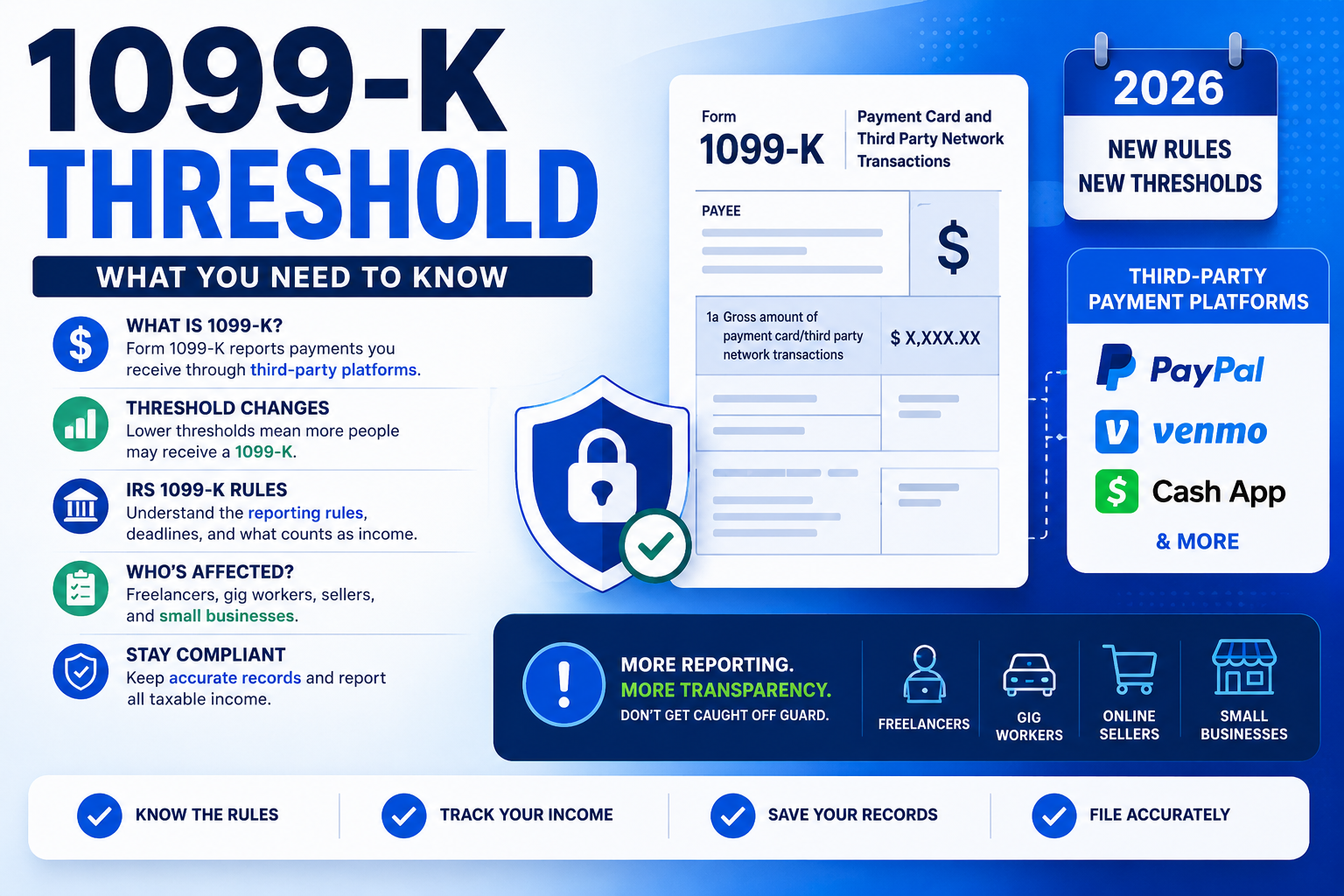

TL;DR: The IRS has phased in a significantly lower 1099-K reporting threshold compared to the original $20,000/200-transaction rule. For the 2026 tax year, third-party payment platforms (PayPal, Venmo, Stripe, Square, Cash App for business) must issue a 1099-K to anyone receiving over $2,500 in business payments, with the threshold dropping to $600 in a subsequent year per the phased implementation schedule. This means significantly more freelancers, side-sellers, and small businesses will receive a 1099-K than in prior years — even if they always owed the same taxes regardless of the form.
Executive Summary
The 1099-K reporting threshold has been a moving target for several years, as the IRS has repeatedly delayed implementing the lower threshold originally set by the American Rescue Plan Act of 2021. After multiple delays, the threshold is now phasing down significantly, meaning many more people who use PayPal, Venmo, Stripe, Square, and similar platforms for business income will receive a 1099-K for the first time.
This guide explains exactly what changed, who’s affected, and how to prepare — regardless of whether you’re a freelancer, small business owner, or occasional online seller.
Who This Guide Is For
- Freelancers and gig workers receiving payment through PayPal, Venmo, or similar platforms
- Small business owners using Stripe, Square, or other payment processors
- Online sellers (Etsy, eBay, Facebook Marketplace) conducting regular sales
- Accountants and bookkeepers advising clients on this changing requirement
What Is a 1099-K, and Why Does It Exist
A 1099-K is an IRS information return that third-party payment networks send to both the IRS and the recipient, reporting the gross amount of payments processed through that platform during the tax year. It exists to help the IRS track income that might otherwise go unreported, particularly from gig work and online selling that has grown substantially over the past decade.
Important: Receiving a 1099-K does not change how much tax you owe. It simply reports income that was already taxable — you were always required to report this income, with or without the form. The threshold change affects who receives the form, not the underlying tax obligation.
The Threshold Timeline
| Tax Year | Reporting Threshold | Transaction Count Requirement |
|---|---|---|
| Pre-2022 (original rule) | $20,000 | 200+ transactions |
| 2022-2023 | $20,000 (delayed implementation) | 200+ transactions |
| 2024 | $5,000 | None |
| 2025 | $2,500 | None |
| 2026 and beyond | $600 | None |
Critical detail: The transaction count requirement has been eliminated entirely. Previously, you needed both to exceed the dollar threshold AND have 200+ transactions. Now, a single transaction exceeding the dollar threshold can trigger 1099-K issuance.
Who Is Affected by This Change
Freelancers and Independent Contractors
If you receive payment via PayPal, Venmo (business profile), or similar platforms for freelance work, you’ll likely receive a 1099-K at a much lower income level than in previous years.
Online Sellers
Casual sellers on Etsy, eBay, Poshmark, and similar platforms who occasionally sell items will increasingly receive 1099-Ks even for relatively modest sales activity, since the transaction count protection has been removed.
Small Business Owners
Businesses already using Stripe, Square, or similar processors for customer payments were typically already receiving 1099-Ks at the old $20,000 threshold, and will continue to receive them — this change primarily affects businesses operating below that previous threshold who weren’t receiving forms before.
Personal Transactions (Generally Not Affected)
Payments correctly categorized as personal (splitting a dinner bill, reimbursing a friend) should not trigger 1099-K reporting, provided they’re correctly marked as personal/non-business transactions within the payment platform.
Why This Matters Even If Your Tax Liability Doesn’t Change
Increased Scrutiny on Underreported Income
If you previously didn’t report side income because no form existed to flag it, the IRS will now have direct visibility into payments you receive — making accurate reporting more important than ever.
Risk of Overreporting Due to Personal/Business Confusion
A common new problem: payments incorrectly categorized as business (or platforms defaulting to business classification) can generate a 1099-K for genuinely personal transactions, requiring you to demonstrate to the IRS that the amount wasn’t actually taxable income.
Reconciliation Complexity
Businesses receiving payments across multiple platforms (PayPal, Stripe, Venmo) now need to reconcile multiple 1099-Ks against their actual books, since gross payment amounts reported may not match net income after fees, refunds, and other adjustments.
How to Prepare for 1099-K Changes
1. Separate Business and Personal Payment Accounts
If you use PayPal or Venmo for both personal and business purposes, set up separate accounts or properly use the platform’s business/personal transaction designation to avoid confusion.
2. Maintain Accurate Bookkeeping Independent of 1099-K Forms
Don’t rely on 1099-K forms as your primary income record — they report gross payment volume, not net taxable income, and may not perfectly align with your actual tax obligations once fees, refunds, and cost of goods sold are factored in.
3. Reconcile 1099-Ks Against Your Own Records
When you receive a 1099-K, compare it against your own bookkeeping to identify discrepancies before filing, particularly checking for personal transactions mistakenly included.
4. Understand That Selling Personal Items at a Loss Isn’t Taxable Income
If you sell personal items (furniture, clothing) for less than you originally paid, this generally isn’t taxable income even if it generates a 1099-K — but you need documentation to support this position if questioned.
5. Consult a Tax Professional If You Receive an Unexpected 1099-K
If a 1099-K arrives reflecting amounts you don’t believe represent taxable income, address this proactively with a tax professional rather than ignoring the form, since the IRS receives a matching copy.
Common Misconceptions About 1099-K Changes
“If I don’t receive a 1099-K, I don’t have to report the income”
False. All taxable income must be reported regardless of whether a 1099-K or any other information return was issued. The form is a reporting mechanism, not a determinant of tax liability.
“The lower threshold means I owe more in taxes”
False. Your tax liability is based on your actual taxable income, not on whether a form was issued reporting it. If you were already correctly reporting this income, the threshold change has no effect on what you owe.
“Personal payments between friends will now be taxed”
Generally false, provided they’re correctly categorized as personal/non-business transactions within the payment platform. Genuinely personal transactions shouldn’t trigger 1099-K reporting when properly designated.
What to Do If You Receive a 1099-K for Personal Transactions
- Contact the issuing platform to request a corrected form if the amount clearly reflects personal, non-taxable transactions
- Document the nature of the transactions (e.g., receipts showing items sold at a loss, evidence of personal reimbursement)
- Report the 1099-K amount on your tax return with appropriate offsetting entries if a correction isn’t issued in time, following current IRS guidance for reporting nontaxable amounts shown on a 1099-K
- Keep thorough records in case of any IRS inquiry, since the IRS receives a copy of every 1099-K issued
Frequently Asked Questions
Do I need to report income if I didn’t receive a 1099-K?
Yes, absolutely. All taxable income must be reported regardless of whether you received any information return. The 1099-K threshold only determines who receives the form, not who owes tax.
Will I owe more in taxes because of the lower 1099-K threshold?
No, not if you were already correctly reporting your income. The threshold change affects reporting visibility, not your actual underlying tax liability.
What if my 1099-K includes personal transactions mixed with business income?
Contact the platform to request a correction if possible, and maintain documentation distinguishing personal from business transactions in case of an IRS inquiry.
Does this affect W-2 employees receiving reimbursements via Venmo?
Generally no, provided reimbursements are correctly categorized as personal/non-business transactions within the platform, rather than being processed through a business profile.
Are all states applying the same threshold, or do some differ?
Some states have their own, sometimes lower, 1099-K reporting thresholds that have applied independently of federal rules for several years. Check your specific state’s requirements in addition to the federal threshold.
What happens if a platform issues a 1099-K in error?
Request a corrected form from the platform promptly. If a correction isn’t issued before filing, work with a tax professional to properly report and offset the erroneous amount on your return.
Does selling used personal items on eBay or Facebook Marketplace make me a “business” for tax purposes?
Not necessarily. Occasional sales of personal items, especially at a loss, generally don’t constitute business income, even though they may now trigger a 1099-K under the lower threshold.
Should small businesses change their bookkeeping practices because of this threshold change?
The underlying bookkeeping requirement doesn’t change, but it becomes more important than ever to maintain clean, independent records rather than relying on 1099-K forms as your primary income tracking method.
Final Verdict
The lowered 1099-K threshold means significantly more people will receive this form for the 2026 tax year and beyond — but it does not change anyone’s actual tax liability. The practical impact is increased visibility for the IRS into income that was always technically taxable, plus a greater administrative burden of reconciling 1099-K forms against personal records, particularly for anyone mixing personal and business use of payment platforms.
The best preparation is maintaining clean, separate bookkeeping for business income regardless of which forms you receive, and addressing any 1099-K that appears to include personal, non-taxable transactions proactively rather than after the fact.
This guide provides general informational content based on IRS guidance as of mid-2026 and does not constitute tax advice. Thresholds and implementation timelines have changed multiple times and may change again — consult a qualified tax professional or the IRS’s official guidance for your specific situation.