Skip to content
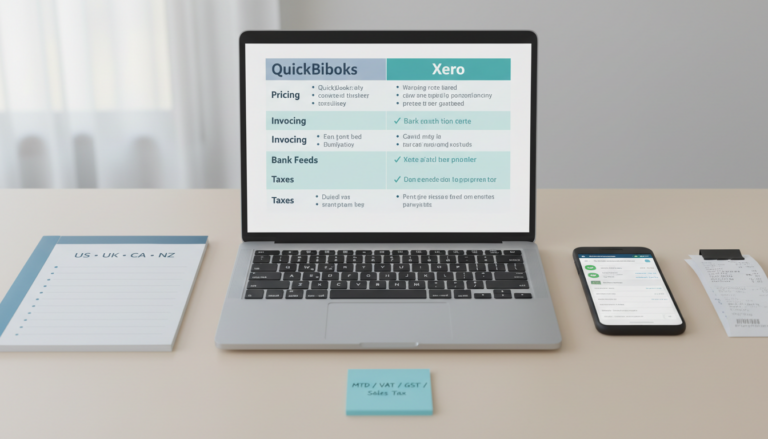
Comparison of recurring billing software in 2026 showing subscriptions, invoicing, dunning, and tax localization on a desk flat‑lay.
Recurring billing is more than “charge every month.” The right tool must support pricing experiments, tax localization, robust dunning, and clean integrations with your CRM/accounting—without ballooning engineering effort or fees.
Quick picks: Stripe Billing for developer‑led businesses needing global payments and flexible pricing; Chargebee for SaaS with complex plans/add‑ons and fast GTM changes; Recurly for strong subscription analytics and churn mitigation; Paddle as merchant‑of‑record (MoR) if you want to offload tax/receipts globally; Zoho Subscriptions/Shopify Subscriptions for budget/ecommerce contexts.
SMBs and SaaS startups selling subscriptions, memberships, retainers, or usage‑based services in US/UK/CA/NZ.
Teams switching from manual invoicing or basic carts to a system that reduces churn and simplifies tax/compliance.
Evaluation Criteria (What Matters for Recurring Revenue)
Subscription models: flat, tiered, volume, usage/metered, add‑ons, trials, coupons.
Billing operations: proration, mid‑cycle changes, backdating, credits, refunds, scheduled changes.
Invoicing & tax: automated invoices/receipts, localized tax (VAT/GST/sales tax), multi‑currency, MoR vs merchant‑of‑record self‑management.
Payments & dunning: card retries, Smart Retries, account updater, PayPal/wallets, bank debits (ACH/SEPA), email/SMS reminders, in‑app nudges.
Analytics & RevRec: MRR/ARR, cohort churn, expansion/contraction, revenue recognition (ASC 606/IFRS 15), exports to BI.
Integrations: accounting (QuickBooks/Xero), CRM, data warehouse (BigQuery/Snowflake), support/helpdesk.
Security & compliance: PCI scope, SCA/3DS, PSD2, KYC/AML (if MoR), data residency.
Pricing & TCO: platform fees, payment processing fees, overage events, implementation effort.
Side‑by‑Side: Capabilities to Compare
Subscription Models and Pricing Flexibility
Stripe Billing: excellent for flat/tiered/volume/usage; price books via API.
Chargebee: strong catalog with experiments, grandfathering, and coupons.
Recurly: robust plans/add‑ons; great for subscription operations at scale.
Paddle (MoR): solid plans with MoR simplicity; fewer bespoke pricing tricks than a raw API.
Invoicing, Tax, and Localization (US/UK/CA/NZ)
Stripe Billing: Stripe Tax add‑on for automated sales/VAT/GST; invoices branded; multi‑currency.
Chargebee/Recurly: native tax engines and Avalara integrations; deep invoice customization.
Paddle (MoR): handles VAT/GST and receipts as the seller of record—huge ops relief for small teams.
Payments, Dunning, and Churn Controls
Stripe Billing: Smart Retries, card updater, Link/Wallets; strong ACH/SEPA coverage.
Chargebee: powerful dunning cadences, in‑app reminders, webhooks for custom flows.
Recurly: industry‑known churn mitigation (gateway‑agnostic), advanced dunning analytics.
Paddle: dunning included; MoR handles many edge cases; limited custom gateways by design.
Analytics, Revenue Recognition, and Integrations
Stripe: Revenue and Billing analytics; BigQuery exports; decent built‑ins.
Chargebee: richer RevRec modules and revenue operations features.
Recurly: strong MRR/ARR/cohorts and gateway‑level analytics.
Paddle: clean MRR reports and receipts; MoR simplifies finance, but advanced BI may need exports.
Security, Compliance, and TCO
All support SCA/3DS; PCI scope varies by checkout model (hosted vs custom).
MoR (Paddle) shifts tax/KYC/AML to vendor, but per‑transaction fees can be higher.
API‑heavy stacks (Stripe) save long‑term if you have dev capacity; otherwise, full‑service tools may be cheaper when counting saved ops time.
Top Picks and Who They Fit
Stripe Billing — Best for developer‑led stacks and global payments
Strengths: unmatched payments coverage and APIs; usage‑based billing; Link/wallets; Stripe Tax.
Limitations: DIY effort for catalogs and some workflows; fees add up with add‑ons.
Best fit: SaaS and platforms with engineers comfortable owning billing logic.
Strengths: flexible plans, trial/discount mechanics, experiments; deep RevRec/integrations.
Limitations: pricing grows with scale/features; requires thoughtful setup.
Best fit: SaaS teams iterating on pricing and packaging frequently.
Strengths: dunning sophistication, analytics depth, gateway‑agnostic approach.
Limitations: may need more integration work for some tax/localization flows.
Best fit: Subscription‑heavy businesses focused on churn reduction.
Strengths: handles tax/VAT/GST and compliance; easy global receipts; fast go‑to‑market.
Limitations: less gateway choice; per‑transaction take can be higher.
Best fit: Small global teams wanting to skip tax complexity.
Strengths: affordable, integrates with Zoho/Shopify ecosystems.
Limitations: fewer advanced SaaS metrics; customization limits.
Best fit: Basic retainers/memberships or ecommerce add‑ons.
Days 1–5: Define catalog (plans, add‑ons, coupons, trials), tax posture (regions, VAT/GST/sales tax), and payment methods (cards, wallets, bank debits).
Days 6–10: Build checkout/update flows; configure webhooks for lifecycle events; set invoice branding and emails.
Days 11–15: Set dunning strategy (retry schedule, comms templates, failed‑payment UX); enable account updater where possible.
Days 16–20: Connect accounting (QB/Xero), CRM, and support tools; test refunds/credits; verify revenue recognition exports.
Days 21–25: Run sandbox to live pilot with 10–20 customers; validate taxes, proration, and receipts in each country.
Days 26–30: Go live; monitor churn/dunning metrics; iterate on pricing and retry logic.
Recommendations by Scenario
Developer‑led SaaS with usage‑based pricing
Pick: Stripe Billing (+ Stripe Tax) or Chargebee if you want less DIY.
Content/membership business with limited engineering
Pick: Paddle (MoR) for tax/offboarding, or Shopify Subscriptions if ecommerce‑first.
High churn pain, need win‑back automation
Pick: Recurly for dunning analytics and recovery rates.
Budget‑sensitive SMB with Zoho stack
Pick: Zoho Subscriptions.
FAQ
Do I need a merchant‑of‑record?
If you want to offload VAT/GST registration, invoicing, and compliance globally, MoR like Paddle helps—at the cost of higher take rates.
How many retry attempts should dunning run?
Common patterns: 3–5 attempts over 7–21 days with card updater enabled; test timing by region and bank.
Is usage‑based billing harder?
It requires accurate metering and event integrity. Choose tools with reliable metered billing APIs and reconciliation.
How to handle tax across USD/GBP/CAD/NZD?
Use automated tax modules (Stripe Tax, Avalara) or MoR; keep invoice fields compliant per country.
The Code
The Code