Skip to content
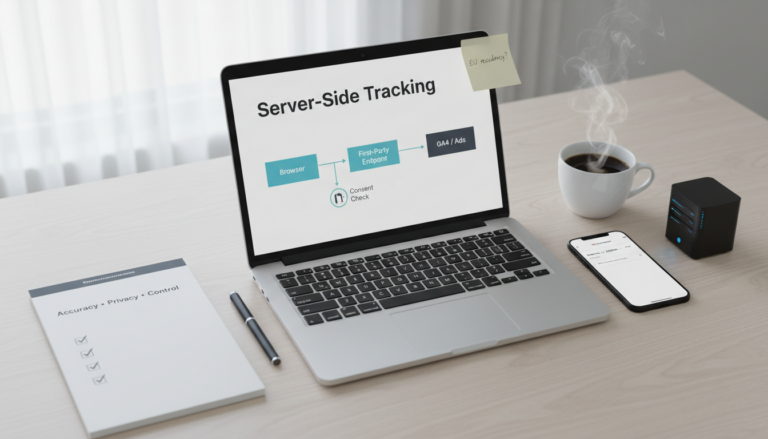
Comparison of consent management platforms in 2026 showing GDPR/CCPA, geotargeting, integrations, and UX considerations on a desk flat‑lay.
Consent isn’t just a banner—it’s a system. The best CMPs balance legal requirements (GDPR/UK GDPR/CCPA), user experience that preserves conversion, and clean integrations with your tags and analytics.
For SMBs, simplicity and stability matter most: reliable geotargeting, easy integration with your tag manager, and clear records of consent. Enterprise tools unlock fine‑grained controls and audit suites but can be overkill for small sites.
Quick picks: Cookiebot/Termly for fast, budget‑friendly compliance; CookieYes/Consentmanager for mid‑market control; OneTrust/Didomi for advanced policies, multiple sites/brands, and audit depth; Sourcepoint/TrustArc for publishers and complex consent orchestration.
Who This Guide Is For
Ecommerce and content sites operating in or targeting the US/UK/CA/NZ/EU.
Teams that need a reliable, low‑overhead CMP with proper consent logs and easy integration to GA4, Plausible/Matomo, and ad tags.
Evaluation Criteria (Compliance + UX + Engineering Fit)
Compliance frameworks: GDPR/UK GDPR, CCPA/CPRA, IAB TCF v2.2, GPP.
Geotargeting & language: show consent only where required; auto‑localize copy.
Integrations: Google Tag Manager, GA4, Plausible/Matomo, Google Ads, Meta, consent mode, data layer events.
UX & conversion: non‑dark‑pattern, clear choices, minimal friction; A/B testing banner layouts.
Auditing & records: consent logs, user proof, policy versioning, DSR support.
Pricing & TCO: pageviews/sessions caps, multi‑site, custom branding, A/B tests, support levels.
Performance: script weight, loading priority, and impact on CLS/LCP.
Side‑by‑Side: Key Capabilities That Matter
Must support GDPR/UK GDPR, CCPA/CPRA. For EU ad stacks, TCF v2.2 consent strings are essential.
GPP support (US state privacy frameworks) is a plus for US‑heavy sites.
Show banners where required (EEA/UK/CA/US states) and suppress elsewhere.
Auto language detection, with easy overrides for EN/FR/DE/ES and others.
Integrations (Tag Managers, Analytics, Ads)
Direct GTM templates or easy dataLayer events (consent granted/denied per purpose).
Built‑in Google Consent Mode hooks; recipes for GA4, Plausible/Matomo, Meta Pixel.
UX Patterns & Conversion Impact
Options: bottom bar, center modal, top banner; preference center.
Avoid deceptive CTAs; provide equal emphasis for “Accept” and “Manage” where required.
Test layouts: two‑click vs three‑click flows; impact on bounce and conversions.
Reporting, Audit, and Records of Consent
Exportable logs tied to user/session IDs (pseudonymous).
Proof of policy version per consent; retention settings.
API/webhooks for BI or data warehouse if needed.
Billing often by pageviews/sessions. Mind caps and overages.
Custom branding, multi‑domain, A/B testing, and audit exports may push you to higher tiers.
Top Picks and Who They Fit
Why
Deep policy control, TCF support, multi‑brand governance, granular audit trails.
Fit
Multi‑site/multi‑brand orgs; regulated industries; teams with legal/infosec engagement.
Trade‑offs
Higher cost and complexity; requires setup time.
Cookiebot / Termly — Simple and budget‑friendly
Why
Quick setup, automatic cookie scanning/categorization, templates for common laws.
Fit
SMBs wanting low‑overhead compliance for a few domains.
Trade‑offs
Limited deep customization on lower tiers; scanning can be noisy—tune categories.
CookieYes / Consentmanager — Strong mid‑market value
Why
Good balance of customization, TCF support (plans vary), and fair pricing.
Fit
Growing sites needing better control and branding without enterprise cost.
Trade‑offs
UI and docs vary by feature; verify exact TCF/GPP needs on the chosen plan.
Why
Robust TCF workflows and monetization‑aware consent flows for media sites.
Fit
Publishers with complex ad stacks and GEO policies.
Trade‑offs
Typically pricier; integration effort is higher.
Implementation Patterns (Fast, Clean, and Compliant)
Step 1: Map your tags and data flows (analytics, ads, heatmaps, chat).
Step 2: Choose CMP tier that supports your regions and frameworks (GDPR/CCPA/TCF).
Step 3: Implement via GTM or direct script; enable Google Consent Mode where relevant.
Step 4: Configure geotargeting and languages; write clear, non‑dark‑pattern copy.
Step 5: Verify: check that tags respect consent states (block until granted where required).
Step 6: Enable consent logs/exports; set retention and policy versioning.
Step 7: Monitor consent rates; A/B test layouts; keep policies synced with Privacy page.
Recommendations by Scenario
Single ecommerce site targeting US + occasional EU traffic
Pick: CookieYes/Termly (budget) or Cookiebot (scan + geotargeting)
EU‑heavy audience using ads with TCF requirements
Pick: OneTrust/Didomi/Consentmanager with TCF v2.2 enabled
Publisher with complex ad stack and GEO rules
Pick: Sourcepoint/OneTrust
Multi‑brand organization with strict audit requirements
Pick: OneTrust/Didomi (enterprise tiers)
FAQ
Do I need a CMP in the US?
If you run personalized ads/tracking, a CMP that supports state privacy frameworks and Google Consent Mode is recommended.
Can I avoid cookies entirely?
Tools like Plausible/Matomo can run cookieless, reducing consent friction—but ad tags still need consent in many regions.
Will a CMP hurt conversion?
A clear, fast banner with good defaults and geotargeting minimizes impact. Test layouts and copy.
How do I prove consent later?
Keep exportable logs tied to timestamp, policy version, and purposes granted/denied.
The Code
The Code